
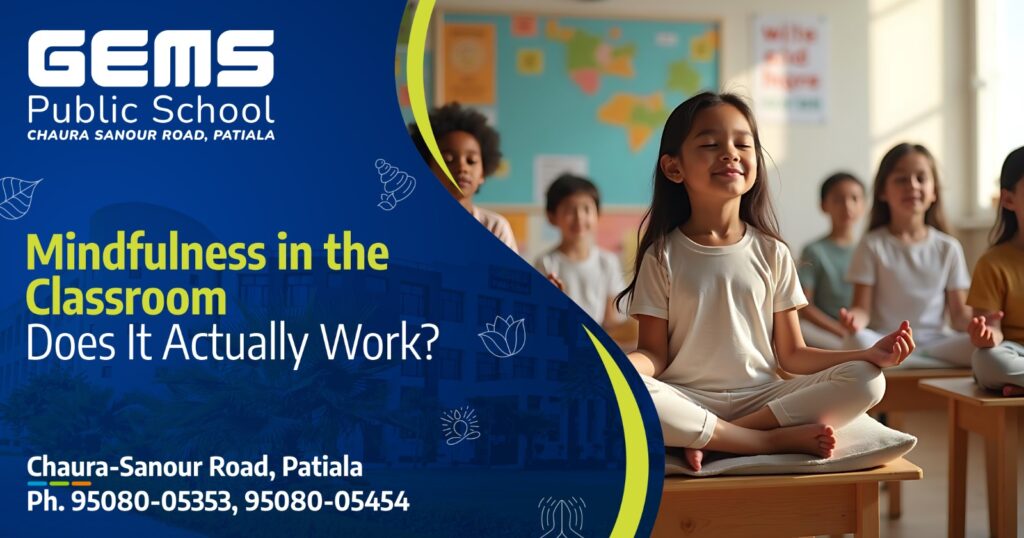
For years, teachers have been looking for ways to create a positive learning setting. There are a few strategies that have been used and tried by teachers over the years with some positive results, but in the present times, many teachers are using the new solution – mindfulness in the classroom.
A mindful classroom is the culmination of the greater mindfulness practice and has been shown to improve productivity, reduce stress, and create a caring and peaceful classroom. A mindful classroom could offer any of these benefits, and there are many ways to make this positive pedagogic approach a reality in your classroom.
What is Mindfulness?
This mindfulness practice has its roots in ancient Buddhist traditions, but is now widely adopted in schools, hospitals, and other settings. Mindfulness, in general, is an act of paying attention, moment by moment, to what’s happening in the mind, body, and world around us, with a gentle, nurturing lens. It means to truly be in the moment without distractions or consideration of past or future events.
Students are encouraged to relate their lived learning experiences to increase their consciousness about values and sense of meaning. This in turn, promotes knowledge of self, others, and larger communities.
Why is Mindfulness Important in Classrooms?
Classrooms are no longer just about learning academic material; it’s about learning life skills in clubs and extra-curricular programs, and learning emotional intelligence as well. When it comes to schools, the inclusion of a mindfulness program provides a comprehensive strategy for education – one that combines mental health with academic success.
- Mindfulness is taught to students to help them manage their stress and focus better in class – students are taught deep breathing exercises, meditation, reflective exercises, etc.
- These practices can be particularly useful when facing challenging situations, such as exams, when anxiety can affect academic performance.
Advantages of Mindfulness in School:
Improved Focus & Concentration
When students practice mindfulness, they are more likely to be able to concentrate because they are less distracted. The students will learn to cultivate mindfulness, thereby improving their learning process.
Stress Reduction
Students may experience high levels of stress in exams, assignments, and/or social situations. They are able to keep calm and composed through mindfulness practices, which minimises the risk of burnout.
Emotional Regulation
The skills taught in mindfulness in education are for responding to and regulating emotions. This leads to better relationships with peers, and fewer behaviour issues are reported in the classroom.
Enhanced Creativity
Mindfulness encourages students to be calm and open-minded and can help them to think creatively and see things differently.
Better Teacher-Student Relationships
Teachers who incorporate mindfulness into their classrooms often become more empathetic and understanding. This helps to improve teacher/student relationships and can contribute to positive learning environments.
How to Apply Mindfulness to Your Classroom
Before you enter the classroom, find a mindfulness resource or take a mindfulness-based education program so that you can create a strong plan for your success and be better prepared to achieve it.
Once you’ve done your research, here are some steps to follow to develop and maintain a mindful classroom.
Guided Meditation — This can be an object in the classroom, a poster, a mind jar, or any display that everyone in the classroom is aware of and understands that it is time to be quiet and still. Taking just a few minutes each day to re-center and re-focus can create a peaceful environment for all as well as a positive feeling for everyone.
Breathing exercises — Mindfulness takes practice, so help you and your students stay on top of their new skills by taking time to practice often. Engage in mindful breathing for a few minutes throughout your day, utilize mindful pauses or breaks in between, such as listening to gentle sounds/music while working in class, and ask your students to participate in some form of slow or gentle physical activity (stretch/yoga).
Listening activities — particularly after group work, or when students return from recess. Usually, the volume levels are high, as is the energy, so both should be adjusted. To help calm the space, try a sound check bell to reset the classroom.
Movement – Mindful movement in school, including yoga, helps improve students’ physical health as well as promotes a sense of mindfulness. Help students to generate intentional and breath-related movements to set the stage for them to become connected with their bodies.
Gratitude — students’ expressions of being grateful are encouraged in regular reflection, leading to lessons of emotional resilience, empathy, and connection to the present moment.
Practice Goal Setting — Making intentions is a great way to begin the day for both you and your students. You can develop long-term and short-term goals; however, if you develop a purposeful outline of the types of experiences you want each day or the feelings you want to have, you will be able to teach with intention and help your students to be more intentional.
Nature walks — provide an opportunity for students to spend time in nature and experience peace, serenity, and present moment awareness. Understanding their natural environment helps to create an appreciation for their surroundings and the opportunities that exist.
Conclusion
Mindfulness in education is a straightforward and powerful tool that brings about change for students’ whole-person development. It improves academic achievement and promotes emotional health and well-being, which is a practice that is vital for modern schools. With the integration of mindfulness and as it becomes a part of daily life, we can produce a generation of confident, compassionate, and focused people.
In our future, let’s acknowledge the potential of mindfulness in the classroom environment and let’s allow students to have the resources they need to be successful both academically and personally.
Frequently Asked Questions
What does it actually look like to have mindfulness in a classroom?
Mindful education is the process of introducing the concepts, principles, and practices of meditation into education to teach students to learn how to calm their minds, which can help them build empathy, self-awareness, and communication skills, while also getting a more grounded sense of themselves
What is the value of having a mindful student?
Mindfulness includes several benefits, such as improved attention, self-awareness, and emotional regulation skills. Mindfulness practices in the classroom have a much longer impact on the students once they leave school and will continue to help them throughout their lives.
What could some of those practical mindful activities be?
Simple techniques for teaching mindfulness in the classroom include breathing exercises, guided meditation, nature walks, and setting intentions.
What effect does mindfulness have on the school as a whole?
After students understand the basics of mindfulness, they can now make it a routine and easily carry it into other social settings, such as sports teams and clubs, and socializing with friends.
What about mindfulness in the classroom for teachers?
Practice mindfulness with their students to find stress relief and improve their emotional health. When teachers and staff feel steady and know how to handle their own thoughts and emotions, it makes things better for everyone in the school.