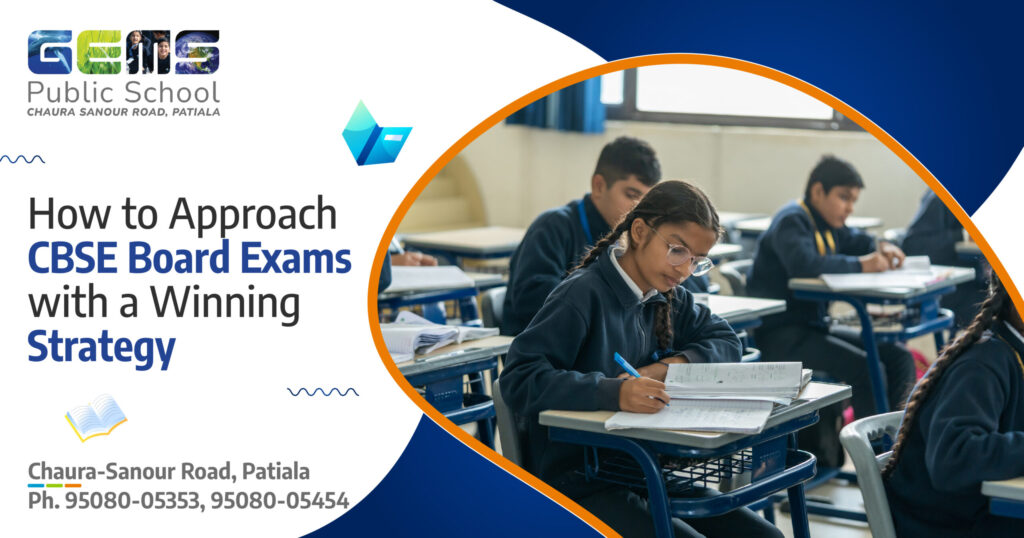
How to Approach CBSE Board Exams with a Winning Strategy: Lessons from GEMS Public School, Patiala
CBSE Board Exams aren’t just another set of tests. They mark a big moment in every student’s school life. It’s not just about what you know—it’s about how you prepare, how you handle pressure, and how smartly you approach everything. Sure, the stress is real. But with the right plan, you can swap anxiety for confidence. If you want a blueprint, look at GEMS Public School in Patiala. Their students keep hitting high marks, and that’s no accident. Here’s a step-by-step guide to help you take on your CBSE Board Exams and actually come out on top. Step One: Get to Know Your Syllabus and Exam Pattern Don’t go in blind: The first thing you need is a clear map of the battlefield. Random studying leads to missed topics and last-minute panic. Start with the basics: Download the official CBSE syllabus for every subject: GEMS Public School doesn’t skip this step—they make sure everyone knows exactly what’s covered, what’s been dropped, and how much each section matters. Dig into the marking scheme: Look at old question papers. Figure out how marks are split between different chapters, what kinds of questions come up (think: objective, short answer, long answer), and where you get choices. Not all chapters matter equally: Focus more on the units that carry the most marks. GEMS teachers push this point, and it makes a difference. Step Two: Build a Study Schedule That Actually Works Wishing you’ll do well isn’t enough. You need a plan. Your study schedule is your lifeline. Be specific: Don’t just say, “I’ll study Chemistry.” Say, “I’ll finish Organic Chemistry reactions from Unit 13 and do 15 practice questions.” Break the syllabus down into daily and weekly chunks you can actually finish. Mix it up: Don’t get stuck on your favorite subject for days. Balance matters—GEMS students keep every subject in the rotation so nothing gets rusty. Make time for revision: Don’t leave revision until the last weekend. Block out days to go back over what you learned a week or a month ago. Life happens: Build in some buffer time for stuff you didn’t plan—like a tough chapter or an unexpected event. Step Three: Don’t Just Read—Learn Actively Reading through notes isn’t enough. You have to engage your brain. Make your own notes: Write things out in your own words. Draw flowcharts, diagrams, or timelines. It helps you remember. Keep practicing: For Math and Physics, keep solving problems. For subjects that need long answers, practice writing within the set word limit and time. Teach someone else: Try explaining a concept out loud—to a friend, a family member, or even your mirror. If you can make it simple, you’ve really learned it. GEMS encourages this all the time. Try mnemonics and mind maps: They’re lifesavers when it comes to memorizing lists and connecting ideas. Step Four: Use Previous Years’ Papers and Sample Papers This is as close as you can get to the real exam before the big day. Spot the patterns: Some questions show up again and again. Make sure you know those topics inside out. Practice with a timer: Sit down and do a whole paper in one go. You’ll train your brain for the real three-hour marathon. Work on your answer presentation: Write neatly. Use headings, sub-points, and diagrams. A tidy answer sheet always gets noticed. Check yourself honestly: After you finish a paper, mark it. Figure out if you made a silly mistake, misunderstood a concept, or just ran out of time. Fix those problems now, not later. Step Five: Don’t Ignore Health and Mindset You can’t separate your brain from your body. If you ignore your health, your grades will take the hit. Sleep matters: Get 7-8 hours every night. Your brain needs that rest to remember what you studied. All-nighters do more harm than good. Eat right: Balanced meals, lots of water, some nuts and fruits—they all help. Junk food and too much caffeine? Skip them. Move your body: Even a quick walk or a few stretches can lower stress and keep you sharp. Take care of your mind: If you’re anxious or stressed, try some deep breathing or mindfulness. Don’t push your feelings aside—deal with them head-on. Conclusion Cracking the CBSE Board Exams isn’t just about pouring in endless hours. It’s about being smart—planning well, keeping up with practice, and actually taking care of yourself along the way. The best schools, like GEMS Public School in Patiala, don’t just rely on hard work. They build a system, stick to schedules, and keep things organized. That’s what sets their students apart. These exams aren’t just testing your memory; they’re about how you handle stress and how well you stick to your plan. So, get your strategy sorted now. Walk into that exam hall knowing you’ve got this. Wishing all the aspiring students the very best for their exams!